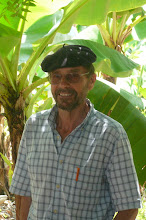
The passing on of a business, especially a farming operation to the next generation is always a delicate and critical endeavour.
The transition to a new leader has to made considering his/her qualifications and not on purchasing power. Although I own a majority of shares in our farming and export company, I do not consider a business as an a asset to be sold like a commodity, but rather as a social organism with in which a very large number of people are involved.
Some calculations will give a picture of the magnitude of that involvement:
There are around 100 persons working in the company, and some 200 farmers supply us with their produce. We can safely assume that each of these 300 persons have an average of 8 dependants, so that we are talking of at least 2,400 persons covering their daily material needs directly through our activity.
In addition to that we should not forget our local merchants, suppliers of services and industrial goods. Extending the chain we are linked with shippers, traders, wholesale distributors and retail stores ending with the main persons for which we in the end all work: the Consumer !
We produce besides various other products, an average of 105,000 Kg Bananas per week all year round. Assuming that the average buyer consumes 0.4kg bananas per week we are talking about serving 262,500 consumers! I see this whole process as an economically interwoven and interdependent fabric, a positive part inside the global economy.
When asked if there is some successor in sight I like to joke that he/she is still being formed in our Kindergarten. Obviously I do not have another 20 years before retiring and realize that it is time to search more actively for someone to take over, finding the right person however is not an easy task.
Our daily business operation is completely managed by our long established local administrating staff, all of them also shareholders of the company.
Although they certainly could continue operating without me, in the long term this could be questionable without a leadership having some of the specific elements I have been able to contribute.
The person we are looking for should have the following qualities:
A philosophical grounding in Anthroposophy, specifically in Biodynamic agriculture and socio-economic “Threefold” concepts.
Other important factors are:
* Leadership and social abilities, farming and technical skills, a sense for business management and understanding of international (organic) markets.
* A affinity for latin culture, self-sufficiency and much tolerance and ability to live in a rather culturally undeveloped “third world country”, (for some time that may have its romantic charm).
I am confident and hopeful that eventually the right person will be found and that our endeavour is destined to continue, and maybe this blog may be the vehicle to that end !
Thursday, May 15, 2008


Friday, May 9, 2008
The end of cheap food.
Already 80 years ago Rudolf Steiner and Albert Howard, the pioneers of Biodynamic / Organic Agriculture foresaw the disastrous effects Industrial manufacturing approaches to agriculture would have.
11 years ago the World Food Summit issued the “Declaration of Rome” with urgent warnings and recommendations regarding the future food supply.
The powers in charge turned a blind eye at such warnings, because they called for uncomfortable attitude changes.
Since the times of Adam Smith a fundamentally flawed “Capitalistic” ideology has emerged, namely that “monetary profit” should be the primary goal of economic activity instead of providing the material necessities of man.
The socialists where aware of this and developed a equally flawed “communistic” ideology.
The underlying cause of such ideologies is the result of the limitations of materialistic thinking.
This approach resulted in a tremendous boost in industrially produced goods, however, when applied to non industrial goods such as agriculture, education and healthcare they had the disastrous results under which we suffer nowadays.
The industrial approach to farming with external inputs increased volume production, with a serious decline life-quality of foods produced, as well as the destruction of natural soil fertility.
On the social level; especially after the opening of the american West and the global trade with cheaply produced grains caused the decline of farm-prices in Europe forcing impoverished farmers of the land into the slavery of factory work and this phenomena is unabatedly continuing today.
The availability of cheap food for the urban centres has been a priority of all governments, and we can see today a global panic fearing food shortages and mass rioting.
I have no doubt that Biodynamic Agriculture can feed a much larger world population than we have now.
The obstacles however are enormous, we would have to change many of our habits, decrease our excess protein consumption (meat), desist of driving our cars with bio-fuels and most difficult of all, is to create incentives for people to stay or even return to farming.
In any case the times of cheap food are gone, it should never have been cheap to begin with, which would have avoided the suffering we are going to face now.
11 years ago the World Food Summit issued the “Declaration of Rome” with urgent warnings and recommendations regarding the future food supply.
The powers in charge turned a blind eye at such warnings, because they called for uncomfortable attitude changes.
Since the times of Adam Smith a fundamentally flawed “Capitalistic” ideology has emerged, namely that “monetary profit” should be the primary goal of economic activity instead of providing the material necessities of man.
The socialists where aware of this and developed a equally flawed “communistic” ideology.
The underlying cause of such ideologies is the result of the limitations of materialistic thinking.
This approach resulted in a tremendous boost in industrially produced goods, however, when applied to non industrial goods such as agriculture, education and healthcare they had the disastrous results under which we suffer nowadays.
The industrial approach to farming with external inputs increased volume production, with a serious decline life-quality of foods produced, as well as the destruction of natural soil fertility.
On the social level; especially after the opening of the american West and the global trade with cheaply produced grains caused the decline of farm-prices in Europe forcing impoverished farmers of the land into the slavery of factory work and this phenomena is unabatedly continuing today.
The availability of cheap food for the urban centres has been a priority of all governments, and we can see today a global panic fearing food shortages and mass rioting.
I have no doubt that Biodynamic Agriculture can feed a much larger world population than we have now.
The obstacles however are enormous, we would have to change many of our habits, decrease our excess protein consumption (meat), desist of driving our cars with bio-fuels and most difficult of all, is to create incentives for people to stay or even return to farming.
In any case the times of cheap food are gone, it should never have been cheap to begin with, which would have avoided the suffering we are going to face now.
Tuesday, February 26, 2008
Cultural-Spiritual aspects of Narcotics.
It is obvious that the root of the decay of our society is a cultural / spiritual one, namely the inability to deal with the grim reality of our materialistic existence.
It is evident in our drive to escape that reality through our “entertainment” industry (movies, TV, video games.....), Mind altering Drugs (legal and illegal), spectator sports, extreme sports etc.
The devilishness of the situation is that those seduced in to this escapes are not the dull conformists, but the rebellious and potentially promising individuals who are led astray, (unconsciously) searching for a more spiritual world view. Our society’s cultural poverty, specifically our educational institutions offer them stones instead of bread.
According to Rudolf Steiner humanity in its evolutionary path had once atavistic clairvoyant capabilities which where lost in order to develop intellectual thinking, individuality and freedom, eventually as a result getting mired in extreme materialism. In our time we are challenged to overcome materialism by developing a modern path of conscious clairvoyance through meditation. Obviously this requires a lot of willpower and discipline, qualities which in our time are very difficult to achieve.
At this point of evolution where humanity has in its hands the freedom and power to destroy our planet it is a matter of survival to again build a bridge between religion and science, changing our approach to nature and the spiritual reality behind it.
It is evident in our drive to escape that reality through our “entertainment” industry (movies, TV, video games.....), Mind altering Drugs (legal and illegal), spectator sports, extreme sports etc.
The devilishness of the situation is that those seduced in to this escapes are not the dull conformists, but the rebellious and potentially promising individuals who are led astray, (unconsciously) searching for a more spiritual world view. Our society’s cultural poverty, specifically our educational institutions offer them stones instead of bread.
According to Rudolf Steiner humanity in its evolutionary path had once atavistic clairvoyant capabilities which where lost in order to develop intellectual thinking, individuality and freedom, eventually as a result getting mired in extreme materialism. In our time we are challenged to overcome materialism by developing a modern path of conscious clairvoyance through meditation. Obviously this requires a lot of willpower and discipline, qualities which in our time are very difficult to achieve.
At this point of evolution where humanity has in its hands the freedom and power to destroy our planet it is a matter of survival to again build a bridge between religion and science, changing our approach to nature and the spiritual reality behind it.
Living in the Drug-War zone.
Every week our facilities are inspected by a Drug enforcement officer, to verify that there are no Drugs included in our banana shipping containers. Obviously a joke, should we be in the Drug-trade then a little “improvement” to the miserly monthly salary of +- US$200.00 would close his eyes.
While there is a growing amount of drug-consumption on the island, the Dominican Republic and Haiti are mostly regarded as stopovers for drugs en route to North America and Europe. Corruption and weak legal system have converted the island of Hispaniola into a drug trafficking paradise.
Even in our rural area drugs are traded and consumed, and the violence that goes along with it has taken civil war aspects. Amid all the poverty there we see the latest models of luxury cars with price tags over US$ 70,000 driven by young men who do not look like they could read a newspaper.
There is a civil war going on, in a small country like ours with the size and population density of Switzerland we read about 10 deadly shootings every day, most of them drug related!
The Global illegal Drug trade is one of the largest, the amount of money that has to be criminally laundered is enormous, in our country it distorts the economy by inflating land prices (making it impossible to buy farmland and paying for it out of production), Businesses one can not compete with and large construction projects (high rise towers and shopping-malls) which stand empty for years.
Many objective arguments for legalisation have been raised by leading thinkers, however for politicians who have dared propose it , it meant he end of their careers, a notable exception is Gustavo de Greiff former Attorney General of Colombia. (It did also cost him his job!)
Exetracts from a Conversation with Gustavo de Greiff former Attorney General of Colombia.
Toward Drug Legalisation:
The only path to ending narco-trafficking is drug legalisation: that is to say, the regulation of its production and sale. That is the thesis maintained for almost ten years by Gustavo de Greiff, who says that legalisation doesn't have to produce a rise in the consumption of drugs and, in fact, will end the violence, corruption and the progressive breakdown of society caused by narco-trafficking.
According to de Greiff, it is precisely drug prohibition what provokes this violence, as well as the commerce, is its illegal nature, producing enormous profits for drug traffickers and corrupt authorities, a business that will be difficult to stop as long as there are consumers.
"The police arrested the drug traffickers, dismembered cartels, confiscated property, destroyed laboratories, intercepted drug shipments and, in spite of all that, nothing happened in the general panorama of the drug fight, because it kept coming to the consumer markets, among those, the most important, in the United States. The business is so profitable that if you disintegrate one cartel, other narco-traffickers take its place in the market."
The Harms of Prohibition
Beyond the street violence and the disintegration of the social fabric, narco-trafficking causes an unmeasured enrichment of the traffickers and also the corrupt officials, he stressed. "A prohibited business can not have success without the collaboration by authorities who close their eyes to the transport or sale of the drug in exchange for money or favors, the same in producer countries and consumer countries. The corruption reaches individuals at all levels of authority, from the police, to the Customs officers, intelligence agents, airports, maritime port managers and, of course, the politicians," he commented.
De Greiff stressed the importance of legalisation of the business, transport and sale of drugs so that the business stops being so monstrously obscene, and to convert it into an ordinary business that additionally will produce taxes that can be invested in the good of society.
At the same time, he underlined the billions of dollars that are spent annually to repress drug trafficking that will then be able to be dedicated to other goals.
Fear of Legalisation
One of the great difficulties in bringing about legalisation is the fear by the population that drugs will be easier to obtain and raise the number of users. However, the fact is that although drugs are prohibited, they are reachable by any individual in any city of this continent who desires them, he remarked. "Drugs are already everywhere, except that because they are prohibited, small consumers that should be treated as patients go to jail - the bad joke is that nobody is rehabilitated in jail.
In this sense, de Greiff used the example of the legalisation of alcohol in the United States, which ended the business of the large mafias involved in it, and did not produce a rise in consumption.
The Farse of the Drug War
Another of the obstacles to legalizing drugs are all the individuals involved in the corruption, said de Greiff. "As has been said, all the agencies involved in repression and monitoring, as well as the politicians: Some because their jobs would be eliminated, and others because they would stop receiving the benefits of narco-trafficking through bribes. Their business would end."
He cited examples that have been publicly exposed of police who seize drugs but only declare half the volume and sell the rest.
De Greiff mentioned, at the same time, the political game that is played with the numbers of arrests and seizures, that the governments use to publicize their own success in the drug war and to continue justifying the repressive policy, "when, in reality, there is no such success although they imprison more and more drug dealers, since the drugs continue flowing in the same quantities to the consumer markets."
The government most interested and invested in the policy of the drug war and at the same time is its grand promoter, he said, is the United States government, which has used the policy to subjugate the countries of Latin America. On one end they use the "de-certification" process. On the other end they use political and military intervention, more and more, to try and maintain domination and protect the warehouse of cheap natural resources for the United States.
Decriminalization and the Benefits of Legalisation
However, he stressed that decriminalization is not enough: It would only avoid that the consumers go to jail or that the dealers have a more peaceful consumer, but it will not end narco-trafficking nor the current corruption by authorities who enrich themselves at alarming levels while those who suffer are the consumers and the general population.
The solution of the problem of drug trafficking is legalisation of drugs, he repeated, and he specified that legalisation doesn't have to mean sale in open markets but, rather, the regulation of the business, the production, the transport and sale, with permits for each activity, control over the quality of the product so it is not adulterated, and legal limits such as not selling drug near educational institutions, not advertising their sale in the media, etc., and always accompanied by prevention campaigns against abusive consumption and offering medical treatment to addicts.
The full report appears on the internet at http://www.narconews.com/Issue25/article537.html
While there is a growing amount of drug-consumption on the island, the Dominican Republic and Haiti are mostly regarded as stopovers for drugs en route to North America and Europe. Corruption and weak legal system have converted the island of Hispaniola into a drug trafficking paradise.
Even in our rural area drugs are traded and consumed, and the violence that goes along with it has taken civil war aspects. Amid all the poverty there we see the latest models of luxury cars with price tags over US$ 70,000 driven by young men who do not look like they could read a newspaper.
There is a civil war going on, in a small country like ours with the size and population density of Switzerland we read about 10 deadly shootings every day, most of them drug related!
The Global illegal Drug trade is one of the largest, the amount of money that has to be criminally laundered is enormous, in our country it distorts the economy by inflating land prices (making it impossible to buy farmland and paying for it out of production), Businesses one can not compete with and large construction projects (high rise towers and shopping-malls) which stand empty for years.
Many objective arguments for legalisation have been raised by leading thinkers, however for politicians who have dared propose it , it meant he end of their careers, a notable exception is Gustavo de Greiff former Attorney General of Colombia. (It did also cost him his job!)
Exetracts from a Conversation with Gustavo de Greiff former Attorney General of Colombia.
Toward Drug Legalisation:
The only path to ending narco-trafficking is drug legalisation: that is to say, the regulation of its production and sale. That is the thesis maintained for almost ten years by Gustavo de Greiff, who says that legalisation doesn't have to produce a rise in the consumption of drugs and, in fact, will end the violence, corruption and the progressive breakdown of society caused by narco-trafficking.
According to de Greiff, it is precisely drug prohibition what provokes this violence, as well as the commerce, is its illegal nature, producing enormous profits for drug traffickers and corrupt authorities, a business that will be difficult to stop as long as there are consumers.
"The police arrested the drug traffickers, dismembered cartels, confiscated property, destroyed laboratories, intercepted drug shipments and, in spite of all that, nothing happened in the general panorama of the drug fight, because it kept coming to the consumer markets, among those, the most important, in the United States. The business is so profitable that if you disintegrate one cartel, other narco-traffickers take its place in the market."
The Harms of Prohibition
Beyond the street violence and the disintegration of the social fabric, narco-trafficking causes an unmeasured enrichment of the traffickers and also the corrupt officials, he stressed. "A prohibited business can not have success without the collaboration by authorities who close their eyes to the transport or sale of the drug in exchange for money or favors, the same in producer countries and consumer countries. The corruption reaches individuals at all levels of authority, from the police, to the Customs officers, intelligence agents, airports, maritime port managers and, of course, the politicians," he commented.
De Greiff stressed the importance of legalisation of the business, transport and sale of drugs so that the business stops being so monstrously obscene, and to convert it into an ordinary business that additionally will produce taxes that can be invested in the good of society.
At the same time, he underlined the billions of dollars that are spent annually to repress drug trafficking that will then be able to be dedicated to other goals.
Fear of Legalisation
One of the great difficulties in bringing about legalisation is the fear by the population that drugs will be easier to obtain and raise the number of users. However, the fact is that although drugs are prohibited, they are reachable by any individual in any city of this continent who desires them, he remarked. "Drugs are already everywhere, except that because they are prohibited, small consumers that should be treated as patients go to jail - the bad joke is that nobody is rehabilitated in jail.
In this sense, de Greiff used the example of the legalisation of alcohol in the United States, which ended the business of the large mafias involved in it, and did not produce a rise in consumption.
The Farse of the Drug War
Another of the obstacles to legalizing drugs are all the individuals involved in the corruption, said de Greiff. "As has been said, all the agencies involved in repression and monitoring, as well as the politicians: Some because their jobs would be eliminated, and others because they would stop receiving the benefits of narco-trafficking through bribes. Their business would end."
He cited examples that have been publicly exposed of police who seize drugs but only declare half the volume and sell the rest.
De Greiff mentioned, at the same time, the political game that is played with the numbers of arrests and seizures, that the governments use to publicize their own success in the drug war and to continue justifying the repressive policy, "when, in reality, there is no such success although they imprison more and more drug dealers, since the drugs continue flowing in the same quantities to the consumer markets."
The government most interested and invested in the policy of the drug war and at the same time is its grand promoter, he said, is the United States government, which has used the policy to subjugate the countries of Latin America. On one end they use the "de-certification" process. On the other end they use political and military intervention, more and more, to try and maintain domination and protect the warehouse of cheap natural resources for the United States.
Decriminalization and the Benefits of Legalisation
However, he stressed that decriminalization is not enough: It would only avoid that the consumers go to jail or that the dealers have a more peaceful consumer, but it will not end narco-trafficking nor the current corruption by authorities who enrich themselves at alarming levels while those who suffer are the consumers and the general population.
The solution of the problem of drug trafficking is legalisation of drugs, he repeated, and he specified that legalisation doesn't have to mean sale in open markets but, rather, the regulation of the business, the production, the transport and sale, with permits for each activity, control over the quality of the product so it is not adulterated, and legal limits such as not selling drug near educational institutions, not advertising their sale in the media, etc., and always accompanied by prevention campaigns against abusive consumption and offering medical treatment to addicts.
The full report appears on the internet at http://www.narconews.com/Issue25/article537.html
Monday, February 11, 2008
“Flying like a Hawk”


A dream I had since childhood, flying the clouds, free like the birds in the sky!
From Ikarus over Leonardo da Vinci’s model man has had that dream, but only modern technology in fabric design has made this possible.
Since several years I am now Paragliding, flying a sort of oversize parachute which is foot-launched from a hillside with wind updraft.
If the conditions are favourable one catches thermals (warm vortex drafts which eventually form the clouds when reaching cooler air) which can carry you up to cloud base, I have flown over 2,500 m over ground, a exhilarating experience, absolute silence besides of a gentle wind humming in the strings of the glider. Often one circles together with birds in the same thermal!
As we are living close to a favourable mountain range, I can be in the air 40 minutes after leaving home, flying for an average of one hour.
With favourable conditions and skill one can make longer cross country flights, my son Sebastian for example made the Dominican record of 75 Km. (he is also the champion of the height record he accidentally let himself be sucked in to a cloud and was propelled to a height of 3,700 m. returning to ground wet and shivering from the cold, but happy to be alive!).
It definitely is an addictive sport, maybe also a substitute for meditation (like taking drugs) ?
My maximum flight duration has been 4.5 hours and 55 km X country distance.
After 5 years of flying, averaging 100 one hour flights per year, it is still every time an adventure to launch, just that step in to the void and the air, leaving the “illusionary” safety of the firm ground behind you! I imagine that this is good preparation for dying, learning to let go of this world!
Is it safe ? No, there are serious accidents, some deathly, but that is all relative, I take more chances driving on the road in the Dominican Republic, one must trust destiny (or ones guardian angel)!
Paragliding pilots (male and female) are a special breed of people, from all segments of society, all strong individualas with very good observation skills (something one has to develop interpreting the many (also invisible) conditions needed to successfully fly the thermals, like cloud-formations, wind conditions, land geology and soaring bird activity).
The flying activity has also some nice social aspects, in our area (which is rural and poor with few opportunities to meet people sharing ones cultural background) we meet many visiting pilots escaping winter conditions in the North.
The paragliding community is relatively small and one starts to know and meet each other on the flying sites all over the world.
Monday, December 17, 2007
Tropical storm “Olga”
Six weeks after Tropical Storm “Noel” the country got hit again by Storm “Olga” with 145 mm precipitation in 24 hrs! Our huricane season ends in November and nobody expected such a late storm, barely have the main highways, bridges and canal systems provisionally been repaired which now need to be tackled again.
On can try to be objective about such natural desasters, especially when one hears at the same time about the tremendous floods in Mexico and Bangladesh with much greater devastations. However seeing such reports on television and experiencing yourself in your neighbourhood is a different reality!
Thousands of mainly poor people are homeless, many havel lost family members, lost all their meager possesions with little expectations of economic recovery. For such people there are no insurances, and governement or NGO support is minimal.
One of the major problems for the population is the widespread destruction of the already in normal times precarious water supply systems, and in many towns water is only sporadically supplied by tanker trucks.
Although the quantities of rainfall of “Olga” do not seem as high as “Noel” the damge especially in the North of the Island is tremendous, suposedly caused by mismanagement of the dam systems, where overflow gates have been opened causing a never experienced flood in Santiago where whole neighbourhoods have been washed away and causing widespread damage in the main agricultural zones of the country. The expectation is that there will be at least a reduction of 60% in Export (mainly Organic) Bananas for the next 6 to 10 Months, a loss of over US$20 million of income for the country. This obviously has deep repercussions as producers from central america will fill the void, a lost marketposition is allways hard to recuperate.
Our own export of Bananas has presently been reduced by 50% , so we are facing difficult times ahead in order to keep our heads over water until we recuperate volumes by April 2008.
On can try to be objective about such natural desasters, especially when one hears at the same time about the tremendous floods in Mexico and Bangladesh with much greater devastations. However seeing such reports on television and experiencing yourself in your neighbourhood is a different reality!
Thousands of mainly poor people are homeless, many havel lost family members, lost all their meager possesions with little expectations of economic recovery. For such people there are no insurances, and governement or NGO support is minimal.
One of the major problems for the population is the widespread destruction of the already in normal times precarious water supply systems, and in many towns water is only sporadically supplied by tanker trucks.
Although the quantities of rainfall of “Olga” do not seem as high as “Noel” the damge especially in the North of the Island is tremendous, suposedly caused by mismanagement of the dam systems, where overflow gates have been opened causing a never experienced flood in Santiago where whole neighbourhoods have been washed away and causing widespread damage in the main agricultural zones of the country. The expectation is that there will be at least a reduction of 60% in Export (mainly Organic) Bananas for the next 6 to 10 Months, a loss of over US$20 million of income for the country. This obviously has deep repercussions as producers from central america will fill the void, a lost marketposition is allways hard to recuperate.
Our own export of Bananas has presently been reduced by 50% , so we are facing difficult times ahead in order to keep our heads over water until we recuperate volumes by April 2008.
Thursday, November 1, 2007


Subscribe to:
Posts (Atom)